Kristen McMenamy Is More Than Your Favorite Instagram Account

00_story.jpg

Today, it feels like there’s a well-established formula for a model’s Instagram feed. A curated slideshow from their latest magazine shoot or campaign? Check. An artfully constructed mirror selfie featuring an up-and-coming designer? Check. An allegedly candid holiday snap of a brightly-colored bikini set against sparkling blue waters? Check. After becoming so accustomed to these tasteful, easy-on-the-eye grids, then, scrolling through supermodel Kristen McMenamy’s Instagram feed is like jumping into a cold plunge pool. Refreshing, but—I have to warn you—bracing.

A little like McMenamy herself. At 56, McMenamy is still as exuberant, stylish, and provocative as she was when she made her name as the face of Chanel and Versace in the late ’80s and early ’90s. And while she might have joined Instagram as recently as April, her 30,000 followers make up a who’s who of fashion, with Naomi CampbellAlessandro MicheleMarc JacobsKaren ElsonInez and Vinoodh, and many, many more reliably lighting up her comments section. 

Tumbling down McMenamy’s Instagram rabbit hole, you might find a powder pink Molly Goddard ruffled cotton gown over an acid green Balenciaga cycling top; a Christopher Kane slip dress printed with an alien’s head paired with rubber Birkenstocks; a Goth-fabulous black leather Marc Jacobs coat teamed with a pair of the designer’s platform Kiki boots; or even a sunflower yellow hoodie and sweatpants set from streetwear label Palace. In one particularly memorable image, she sprawls across a velvet sofa as naked as the day she was born, with manicured talons as her only accessory. “Keep it Real!!???” McMenamy captioned the post.

It’s clear that McMenamy still lives and breathes fashion, even after almost four decades in the industry. When we connect, she’s holed up in the guest bedroom of her London home that has now become her second wardrobe. (What we wouldn’t give to have an hour or two playing dress-up in that closet.) “I am sitting on the floor because my dog has taken up the bed,” she says in her Pennsylvania twang, still present even after living in Britain for nearly 30 years. First things first: Why did she only decide to join Instagram as recently as this spring? “I didn’t want to do it for all this time because I thought it was cooler not to, to be quite honest,” says McMenamy. “All these people bragging about their lives, I don’t need to do that, blah blah blah. Then, over lockdown, I thought, ‘Wait a minute.’ My whole entire life since I was 16 has been dedicated to the world of fashion, except for when I took time out to have kids. It’s my life and it’s what I love. I’ve got a lot of clothes, and I love every single piece that I buy. Why don’t I just do that on Instagram?” 

Her (initially reluctant) collaborators on this weird and wonderful new venture were her children: Lily McMenamy, herself now a successful model and movement director, and Kristen’s two teenage sons with photographer Miles Aldridge. “My kids were like, ‘We don’t want to Instagram that mom!’” she says, before breaking out into an infectious cackle. “But they’ve got an Instagram mom now, so deal with it!”

One of the perks of being supermodel offspring is that they get paid to provide these Instagram snaps, at least. “They take three photos and they say, ‘I did it. Where’s my money?’ But it takes more to create an image than three photos! I’ve done a couple on self-timer, but selfies I hate because my arm gets in the way. I tried the mirror thing, but I can’t get it together,” she says. “I have invested in a lot of sunglasses, as I still can’t do my makeup after all these years, I just make myself look worse. Pat McGrath is sending me makeup which helps a lot, because it’s making me explore and try new things. They create a mood, and I can be punk if I want, ladylike if I want, intellectual if I want. Which I never do.”

WATCH

Shalom Blac’s Beauty Secrets: Watch Her 10-Minute Guide to Airbrushed Skin and Everyday Glam

McMenamy’s approach to clothing has always been idiosyncratic—all the way back to her early years growing up as the third of seven children in a Catholic family in eastern Pennsylvania. “When I had no money, I did the thrift stores and I made up my own stuff,” she says. “I would see people laughing at me on the street and it hurt a little, as it was just me.” After making her way to New York City and doing the rounds with all the major modeling agencies, her career began in earnest upon being sent to Paris. There, she fell headfirst into the Aladdin’s cave of vintage the city offered. “I never had one style,” she says. “It’s always been a day to day, how I'm feeling, what’s the weather like kind of situation.”

This DIY, bootstrap approach to style perhaps explains why McMenamy still gravitates to emerging designers on her Instagram feed in 2021. “I buy most of my clothes online, I don’t love going to the shops,” she says. “My daughter got me into a few brands because she works with all the cool new designers, like Chopova Lowena. She was wearing one of their dresses, and I said, ‘Where did you get that dress? It’s just the most incredibly bonkers, beautiful dress!’ Since then, I’ve been a fan. I adore Marine Serre. It’s such a simple idea but it fits so correctly. I’m a Gucci girl too, and at Balenciaga, what Demna does is incredible.”

MOST POPULAR

It makes sense given that this chameleonic approach to style—a preternatural ability to blend the high with the low—has been McMenamy’s calling card in the fashion world. McMenamy made her start in the late 1980s with a shock of frizzy auburn hair, five-foot-ten stature, and striking pale skin, but it was after the legendary hairstylist Garren chopped it down to a Louise Brooks crop and dyed it black (and François Nars allegedly shaved off her eyebrows) that her arresting beauty truly shone. Quickly, she became a muse of some of the most influential figures in fashion, from Karl Lagerfeld to Steven Meisel. “When I was modeling, Karl would give me something and then I would cut it up, and I would walk back into the showroom in what was meant to be a floor-length skirt, but which was now almost a pair of underwear,” she adds. “I’m sure he was horrified.” Then came fashion’s grunge movement, where McMenamy appeared not only in Marc Jacobs’s infamous spring 1993 Perry Ellis show holding hands with Kate Moss, but also in a groundbreaking Vogue editorial shot by Meisel and styled by Grace Coddington, sealing her status as a bona fide star. 

While McMenamy’s name continues to crops up when discussing the supermodels that defined the ’90s, she still feels like something of an outlier. “I love all those girls, but when it comes to their beauty, I was like the antichrist,” she says. “I don’t know how much the common man would remember me, compared to Naomi [Campbell, a bridesmaid at McMenamy’s wedding to Aldridge] or Cindy Crawford or Christy Turlington. I don’t think anybody is going to put my poster on their bedroom wall. But I kind of like that.” 

Is McMenamy underestimating her legacy, though, given how many mood boards (and yes, bedroom walls) she remains on to this day? “I mean, I went out to my friend’s book launch the other week, and I had three people come up saying, ‘We love your Instagram, and you’re our favorite model, can we have a picture.’ My heart was bursting out of my chest, I was like, ‘Oh my god!’ Somebody said, ‘Doesn’t that bother you?’ And I was like”—here McMenamy pauses before launching into a high-pitched shriek— “Bother me? Are you out of your little mind? Of course not!’ It’s wonderful to be told you’re great. Who doesn’t love that?”

One of the most charming parts of McMenamy’s Instagram presence is her comments section, where you can watch in real time as she reconnects with the friends she worked alongside during the heady days of the ’90s fashion circus. “For many different reasons, that some therapists will one day hear, I kind of didn’t talk to anybody from the industry for a while,” she says of the time period in the 2000s when she stopped modeling to focus on her family. “I really cut off from people. That made me realize that all my friends were people in the business because I worked with them day and night. It wasn’t like a normal friend going out to dinner—we did it all in the makeup room, on trips, on airplanes, in studios. When I stopped the business, I stopped my friendships in a way, which was wrong, but I only see that in hindsight. So it is really nice to connect again.”

It seems, then, that the joys of McMenamy’s Instagram are mutually beneficial. A place for her friends and fans to delight in her distinctive take on fashion, yes, but also an opportunity to carve out a new and more independent lane for her career, which has always thrived on the unexpected. It makes sense that over the past decade, McMenamy’s return to the spotlight has been somewhat tentative. “I don’t take chances anymore, as how much time do I have left?” she says. “But if there are great photographers, stylists, or filmmakers it still gets me really excited.” Still, after choosing to forgo hair dye and embrace her natural gray hair in 2010, McMenamy’s ethereal look has become more in demand than ever, appearing on the covers of Vogue Italia, i-D, and W, as well as in campaigns for the likes of Valentino, Marc Jacobs, and Balenciaga. 

As her Instagram makes obvious, her eye for fashion extends far beyond this lifelong passion to collaborate with designers and image-makers to help them to realize their most ambitious visions. With McMenamy’s knack for styling, becoming a more independent creative would seem like a natural next step. 

But not so fast. “At the bottom of this whole thing is my desire to perform. I don’t want to style other people. I’m not going to make somebody else look good, it’s all about me! I’m a hopeless narcissist,” she says, laughing guiltily. “I don’t want to be in the background, I want to be in the foreground. There was a time when I was doing a lot of acting, but I couldn’t do the English accent, so I did some good stuff but also some flops. I love reading, but I don’t know if I could write. All I can do is leave it to the stars, to the moon, and to the higher power.” Sounds like a perfect—and perfectly Kristen McMenamy—plan.

When I Stopped Shopping by Gender, I Fell in Love With Fashion Again

62E71159-033C-46CF-ABDF-EEB0DDCFEE7C.jpeg

I’ve always been fascinated with women’s clothing. As a child, my tomboy sister refused to wear her frilly, pink princess gowns and toddler heels, but I coveted them. I found comfort in playing with Barbie dolls and dressing like the Spice Girls, but whenever I would try to wear something that I inherently liked—like a tiara—I was told it was wrong. “Boys don’t wear that.”

I eventually grew out of this fashion phase and began wearing the clothes deemed appropriate for boys to wear. The soccer jerseys, grungy band tees, and oversized suits never felt quite like me, but I went along with it. Even now, as an adult man in his late 20s, I still find myself shopping with this same narrow point of view. Even though the women’s section always seems way bigger, with more colorful and fun pieces, I’ll dutifully head to the men’s.

But lately I’ve been rethinking my approach to shopping entirely, as has a growing faction of the industry. I’ve been in a rut since the world began opening up again. Ever get that feeling where you wake up and think, I have nothing to wear? That’s been me, only every single day. Seeing stars like Lil Nas X, Kid Cudi, and Harry Styles push the boundaries of gendered style on the red carpet has inspired me to take an introspective look at my own style and how I’m perhaps limiting myself for no good reason. I decided a few months ago that I would finally have my hot girl summer—as in, I’m finally ready to shop in the women’s section. In the process, I’ve fallen in love with fashion all over again.

Now, am I saying crossing the imaginary borderline between the men’s and women’s sections is a groundbreaking, life-changing concept? Absolutely not. Men have been wearing women’s clothes, and vice versa, for ages. But for me this new exploratory phase has been a serious game changer (and a choice that’s been long overdue).

My first venture was back in June, when I visited 10ft Single by Stella Dallas in Brooklyn (one of my favorite vintage stores). I wanted to pick a familiar store I would be comfortable perusing womenswear in, and I figured the cool crowd there wouldn’t mind. (Lots of Gen Z teens, and Bella Hadid, shop here.) Even though the men’s offering is always pretty good, I ended up scoring in the women’s section: I picked up two simple, silk blouses—one in black, one in burgundy—that I’ve been wearing with jeans almost every single day. I also found a Hawaii tourist tank that has ruched sides. (It’s very Isabel Marant–esque.)

WATCH

“We’ve Gone From Dressing to Look Good to Dressing to Feel Good”—How Fashion Is Changing for Spring 2021

In July, I checked out the women’s assortment at Tokio7, one of my favorite consignment stores in the city, where I admired a crocheted Chloé coat and a purple Anglomania blouse that’s so ’80s in the best way. Shopping online, I also recently acquired a bandana-print Dion Lee tank and a patent By Far shoulder bag. I’ve also been eyeing a Chopova Lowena skirt. The amount of womenswear saved on my wish list keeps growing. It seems that, after a serious dry spell of shopping and being unable to discover something that feels like me, I’ve finally found my fashion mojo again. While much of my closet still tilts masculine—it’s hard to break a habit that I’ve been conditioned into—there’s something about incorporating feminine pinks or purples, or more body-conscious silhouettes, that just feels right. The solution was in front of me this whole time, just in a different area of the store.

Widening my gender shopping scope hasn’t come without its hurdles, however. For one, the sizing is all very different: I’ve had to quickly learn what my waist and top sizes translate into women’s sizes. Sadly, there is no handy conversion chart to determine this (though someone should make this!). It took me a lot of trying and experimenting to determine my women’s size. (Turns out I’m roughly a 12.) I’ve learned men’s shoes are always 1.5 sizes bigger than women’s—meaning my men’s 10 is actually a women’s 11.5. Another hurdle? Even when the clothes do fit, they often don’t fit fit. Women’s pants, for instance, may fit the waist but have a smaller crotch area and often are a no-go as a result. But on the whole buying women’s tops and coats has been a total breeze. Accessories too are always a surefire bet, and they’re an easy way to dip your toes into the idea of genderless dressing.

As this shift is happening industry-wide, these hurdles may get smaller with time. Physical retail stores like Dover Street Market and Browns East are now rethinking their layouts and de-gendering their floor spaces, organizing products by brand or color versus sex. Online retailers like Ssense or Farfetch also feature the same products in both their men’s and women’s tabs, allowing consumers to freely shop between the two. On a larger scale, brands are also designing with a more genderless consumer in mind. Dion Lee, Telfar, and Ludovic de Saint Sernin all do unisex clothes that are well cut and can lean toward a more masculine or feminine aesthetic, depending on the wearer. Skirts are also being embraced by all genders, and labels like Chopova Lowena are styling them on men, women, and nonbinary folks. Sex, it seems, no longer matters in the quest to look chic.

Personally, I’ve learned that my preconceived notions—that women would judge me for shopping in their section, that people would stare at me in disgust if I wore a women’s piece out in public—were all wrong. In fact, nobody has even batted an eyelash at me, even as I’ve traipsed down the street in my new purse or blouse. And maybe that’s because I’m in New York, where anything goes. There’s a certain privilege that comes with dressing up how you want in New York; in other parts of the world, this experimentation is less accepted and could even be seen as a dangerous act. This freedom has helped me embrace my pull toward femininity. Twenty-nine years later, what I wear is starting to make me feel like myself again.

Khloé Kardashian Showed Off Her Naturally Curly Hair in a Set of Gym Selfies

"Felt kinda cute with it (please don't ruin the feeling)."

Khloé Kardashian is a big believer in Brazilian Blowouts (say that five times fast), but every once in a while, she'll change things up and embrace her natural hair texture — say, when a global pandemic strikes ... 

On Friday, the Good American co-founder posted a series of selfies at what appears to be a home gym. Looking workout-ready in a purple sports bra and leggings set from LAPP. and a pair of pastel pink sneakers, the reality star snapped away, putting her voluminous curls on display.

"I rarely wear my natural hair texture," Kardashian captioned her Instagram gallery. "Felt kinda cute with it (please don't ruin the feeling)."

In her Instagram Story, the 37-year-old shared one of the aforementioned selfies alongside an image of her as a curly-haired kid.

"I've been getting straightening treatments on my hair for years," she wrote. "I've been getting Brazilian Blowouts and other treatments since I've been a teenager. I stopped because of Covid. I actually kind a [sic] like my curls."

Worldwide Sensation LiLi, Chef Gordon Ramsey, and Ian Poulter Choose Ferrari

10518622-b2dc-49f6-85e4-89057a160ee9.jpeg

Japan’s multi-entertainment group Tokyo Dream Girls proudly announces Japanese singer LiLi’s debut single “INVISIBLE” featuring Fatman Scoop and DreamDoll.

The song is produced by VIRG and features Grammy Award-winning artist Fatman Scoop, as well as rising American rapper DreamDoll. “It was such an honor to work with someone like [Fatman Scoop], who won a Grammy and pursues the world’s highest standards,” LiLi tells Metropolis of the recording process. “Becoming a singer was always my dream since I was a kid and it finally came true by collaborating with such incredible talents. Every moment was so exciting and there was a lot to learn.”

Recently, LiLi purchased a new drop top Ferrari. It looks like the R&B sensation went cruising to celebrate her recent chart success. LiLi is currently Top 5 on the iTunes Dance charts. You can purchase her song online.

These people probably get access to every limited edition model that Ferrari builds.

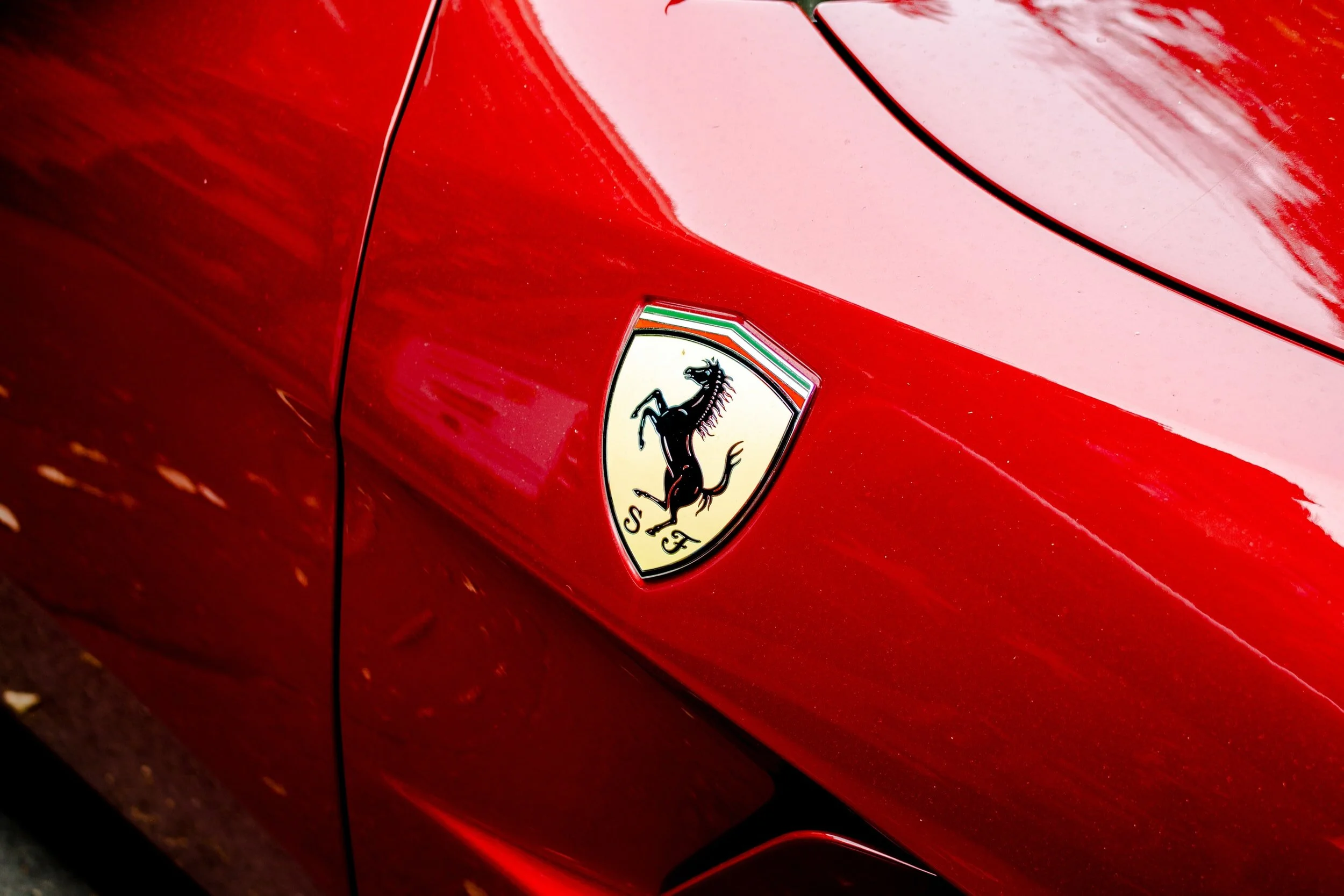
More than almost any other manufacturer in the world, Ferrari rewards owners who like to collect as many models as possible. Unlike a normal expensive car, you can't just go into a dealership and buy a new Ferrari. This may work if you want a "lower model" like a California T, but if you want an F12 or a LaFerrari, you better have an entire collection of Prancing Horses back at home. If you are one of the people who own a huge collection of Ferraris, you may be rewarded by being "allowed" to buy a specialty car at sticker price. Here are a few of those people.

Ian Poulter is a professional golfer from England who plays in the PGA and European Tours. Poulter has been very successful, ranking as high as the fifth best golfer in the world at one point. Obviously, Poulter's athletic ability has resulted in financial success, because he owns a staggering collection of Ferraris. Poulter's collection includes all five of the greatest Ferrari cars including the 288 GTO, F40, F50, Enzo and LaFerrari. Based on his staggering collection, we wouldn't be surprised if Poulter was offered a La Ferrari Aperta or an F12tdf. We do know that Poulter did buy a 458 Speciale Aperta, which he was allowed to customize with an awesome Italian color motif.

Gordon Ramsay is a famous English chef and TV personality. When Ramsay isn't cooking or hosting one of his many cooking shows, he loves to drive around in his collection of Ferraris. In 2015, Forbes listed Ramsay as one of the top 21 earning celebrities in the world at over $60 million. This has obviously allowed him to build up an incredible car collection. Some of his more recent purchases include an F12tdf painted in Bianco Fuji as well as a Grigio Silverstone LaFerrari. Ramsay has appeared on Top Gear several times, and in his latest appearance he announced that he was chosen to buy a LaFerrari Aperta. Obviously Ferrari values him as a customer.

The Chris Evans experiment on Top Gear ended almost as quickly as it began. Evans was definitely not the answer to replace Clarkson, but you really can't deny that the dude loves cars. Evans appeared on Top Gear long before he was a host. In his interview, Evans told Clarkson about his staggering collection of vehicles, most of which were Ferraris. In another Top Gear segment, Evans even let James May get behind the wheel of one of his most prized possessions, a 1961 Ferrari 250 GT California. The car cost around $7 million and was owned by Steve McQueen and James Coburn. The California was just one of many Ferraris in Evans' collection, including a 275 GTB, 458 Speciale, 250 GTO, TR61, 365 GTS, 250 GT Lusso, and 599.

unsplash-image-jBmNhftLcrY.jpg
unsplash-image-0jEmpjrUp9o.jpg